
Integrative Psychotherapy
Rosemary Brown, LMSW
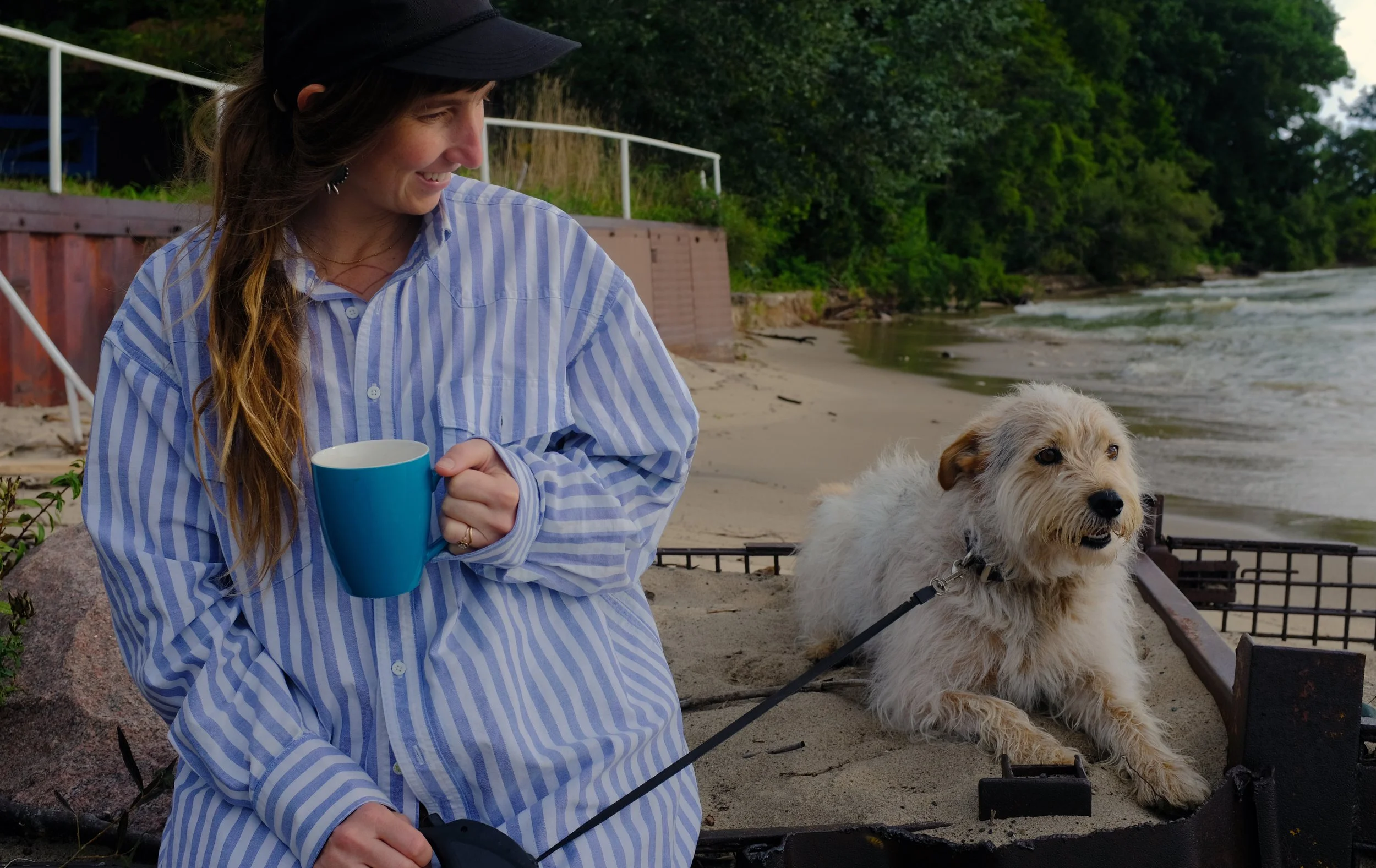
Therapy that starts with you.
You don’t have to know exactly what’s wrong, have the right words, or know where to begin.
Maybe you’re tired of feeling stuck? Maybe something in your life doesn’t feel quite right, or you’re finding yourself in patterns you don’t fully understand? Maybe you simply want a place to slow down and make sense of things?
Whatever brings you here, there’s room for it.
Therapy is a place where we can get curious about your experience, without judgment or a predetermined agenda. We’ll start where you are and see what unfolds from there.
I’m an integrative therapist, which means I draw from different therapeutic approaches rather than following one formula. My work is shaped by both education and lived experience—by what I’ve learned about myself, relationships, values, risk, comfort, conformity and nonconformity, loneliness, connection, and what actually helps people change.
I believe therapy works best when it starts with curiosity. We’ll pay attention to what’s happening in your thoughts, feelings, body, relationships, and everyday life, and get curious about how you got here and where you want to go.
I draw from Existential Theory, Sensorimotor Psychotherapy, Mindfulness, Psychodynamic Theory, Internal Family Systems, and Cognitive Behavioral Therapy. I use these approaches differently with each person. There is no one-size-fits-all treatment here, and I’m not going to tell you what you should think or how you should feel. You’re in the driver’s seat; I’m riding along, trying to understand why you followed the GPS into a lake instead of looking up to see where you are.
So, what does therapy with me actually look like? We talk. We build relationship. I ask questions and offer observations that can help expand your awareness of thoughts, feelings, behaviors, and what’s happening in your body. We explore what works and what doesn’t. We look for patterns, listen to what your emotions might be telling you, and experiment with different ways of responding.
Along the way, I may offer reflection, humor, psychoeducation, resources, curiosity, compassion, or a new way of looking at something. We might work on building relationships, creating boundaries and containers, or developing ways to regulate your nervous system.
Most importantly, we figure it out together.

Formulation-Driven Integrative Psychotherapy
I use a formulation-driven integrative approach. Rather than assuming that psychological symptoms arise from a single etiology, I consider developmental, behavioral, cognitive, relational, biological, environmental, and trauma-related factors. I use the best available evidence to identify potentially modifiable maintaining mechanisms and select interventions according to an individual's presenting problems, goals, preferences, context, and response to treatment.
Underneath all of this is relationship. I don’t believe therapy works simply because we’ve identified the right theory, mechanism, or intervention. Change happens in relationship. The relationship we build in the room is real—it’s a real human connection, with its own patterns, expectations, moments of trust, discomfort, repair, humor, and discovery.
How you experience me, how I experience you, and what happens between us becomes part of the work. It gives us an opportunity to notice things as they happen, to try something different, and to experience being understood without having to perform, conform, or have everything figured out.
The therapeutic relationship isn’t just the backdrop for the work. It is the work.